
Dead Heat Rules and Golf Payout Adjustments
 Available in US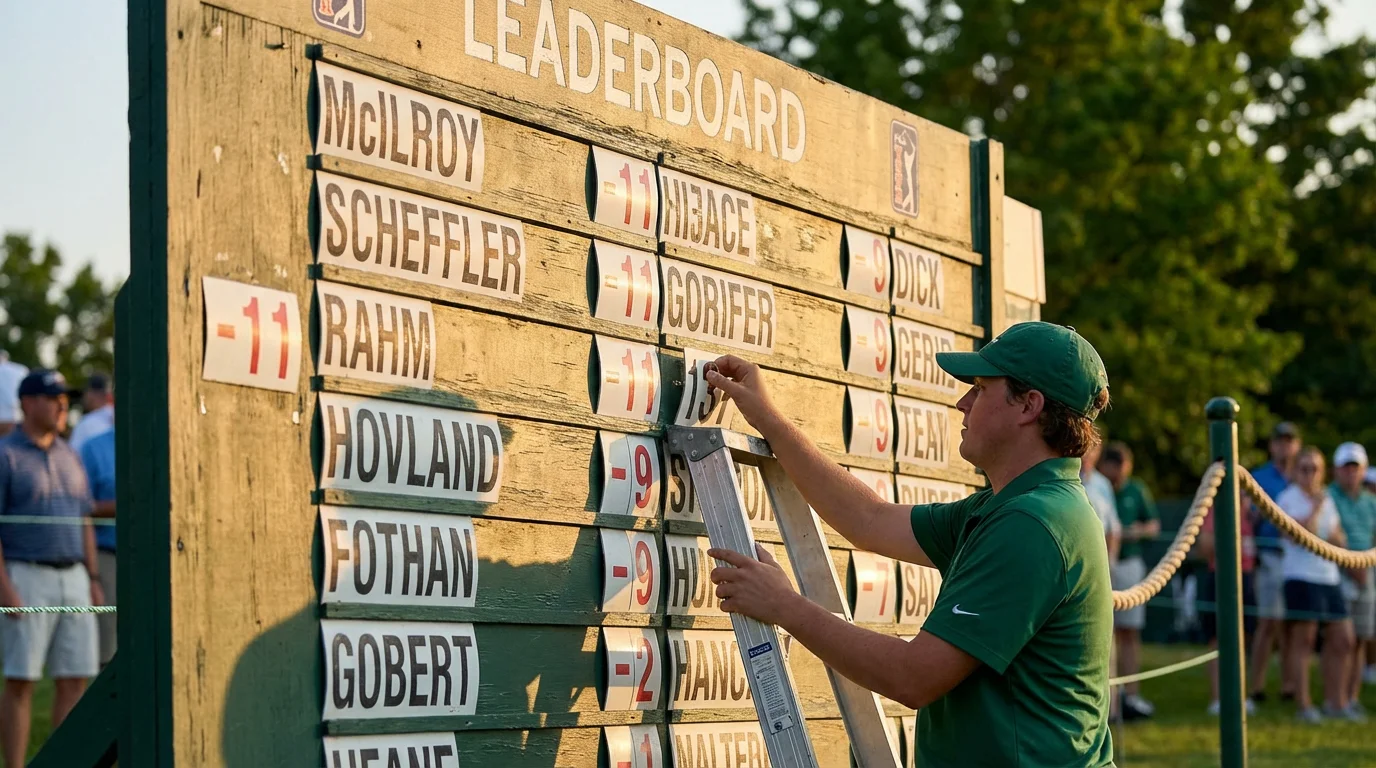

Dead heat rules are the single most misunderstood mechanic in golf betting. Every week, bettors place top-5, top-10, or first-round leader wagers without fully understanding what happens when multiple players tie for a position that straddles their bet’s threshold. The result is a smaller payout than expected and a confused bettor wondering where the rest of the money went. Understanding dead heat rules is not optional if you take golf betting seriously. It is fundamental math that directly affects your expected value on every placement bet you make.
The concept is straightforward in principle: when more players tie for a position than there are available spots, the sportsbook divides your bet proportionally. If you bet on a player to finish in the top 5 and three players tie for fifth place, only one of those three spots “counts” for your bet. Your stake is effectively split — one-third of it pays at full odds, and the remaining two-thirds are returned. The payout is reduced, sometimes dramatically, depending on how many players are involved in the tie.
Golf is uniquely susceptible to dead heats because ties are baked into the sport’s structure. Unlike head-to-head competitions where someone always wins, stroke play regularly produces clusters of players on the same score. A 72-hole tournament might have four players tied for eighth place, six tied for fifteenth, and three tied for third. Every one of those ties is a potential dead heat scenario for bettors holding top-finish wagers. The more players involved in the tie and the closer that tie falls to your bet’s cutoff position, the more it costs you.
Dead Heat Payout Calculations
The dead heat formula is simpler than most bettors assume, but its impact can be severe. Here are the basic mechanics: your original stake is divided by the number of players tied for the relevant position, and only that fractional stake pays out at the full quoted odds. The remainder of your stake is treated as a loss.
Suppose you place a $100 bet on a player to finish in the top 10 at odds of +400. Your player finishes in a tie for tenth place with two other players. Three players are tied for the tenth spot, but only one top-10 position remains. The dead heat formula splits your $100 stake by three, so one-third ($33.33) pays at +400, returning $166.65 (the $33.33 stake plus $133.32 in profit). The remaining $66.67 of your stake is lost. Instead of the $500 total return you expected from a clean top-10 finish, you receive $166.65. That is a 67% reduction in payout from a bet that technically cashed.
The severity of the dead heat reduction depends on two factors: the number of players tied and the number of available positions at the threshold. If your player ties for ninth place with one other player in a top-10 bet, two players are sharing two spots — no reduction at all. Both players are inside the top 10, so the dead heat rule does not apply. The rule only triggers when the number of tied players exceeds the number of remaining positions within the bet’s scope.
Understanding this distinction is critical. A tie for a position well inside your bet’s threshold — say, three players tied for seventh in a top-10 bet — does not trigger dead heat rules because all three players fit within the top 10. Dead heat reductions only apply at the boundary, when the tie straddles the line between finishing inside and outside the bet’s range.
Where Dead Heats Hit Hardest in Golf
Top-5 bets are the most common victims of dead heat reductions. The threshold is narrow, and the cluster of players who finish between fourth and eighth place in a golf tournament is often dense. It is not unusual for three or four players to tie for fifth place in a 72-hole event, and when that happens, a top-5 bettor with a horse in that group takes a significant haircut.
First-round leader bets are another high-risk market for dead heats. After just 18 holes, ties at the top of the leaderboard are extremely common. Two, three, or even four players might share the lead after Thursday’s round. If you back a player to be the first-round leader and they share the lead with two others, you face a dead heat reduction that cuts your payout by roughly two-thirds. FRL bets already carry high variance; the dead heat risk compounds that variance further.
Top-20 bets are less affected by dead heats in practice because the wider threshold accommodates more ties without triggering the rule. A cluster of players tied for eighteenth place still fits within the top 20 in most cases. However, when a large group ties at exactly the twentieth position, the dead heat can still apply and the reduction on a five-way or six-way tie at the cutoff is substantial. Do not assume that wider placement bets are immune.
Each-way bets carry dead heat exposure on the place portion. If you place an each-way bet and your player finishes in a dead heat for the last qualifying place position, the place part of your bet is reduced by the dead heat formula while the win part loses entirely. This dual exposure makes it important to factor dead heat risk into your each-way calculations, particularly at events where the leaderboard tends to produce clusters.
Dead Heat Risk as a Factor in Bet Selection
Once you understand how dead heats work mechanically, the next step is incorporating that knowledge into your bet selection process. Dead heat risk is not random — certain tournaments, markets, and positions carry higher dead heat probability than others, and smart bettors account for this before placing a wager.
Tournaments with deep fields and low scoring variance tend to produce more ties at key thresholds. A calm-weather PGA Tour event on a birdie-friendly course will typically see tight clusters of players around the top-5 and top-10 cutoffs. Major championships, by contrast, produce more score separation due to tougher conditions, which reduces — but does not eliminate — dead heat frequency. When choosing between two similar bets at different tournaments, factor in the expected scoring distribution. A top-5 bet at a major may carry less dead heat risk than the same bet at a typical regular-season event.
The odds you are getting on a placement bet should always be evaluated against the dead heat probability at that threshold. A top-5 bet at +300 looks attractive on its face, but if there is a meaningful chance of a three-way tie for fifth, your effective expected odds are lower than +300. Some experienced bettors mentally discount top-5 odds by 15-25% to account for average dead heat frequency across the PGA Tour season. That adjustment changes the calculus on which bets offer genuine value.
One practical approach is to favor top-10 or top-20 bets over top-5 bets when the odds difference is small. The wider threshold reduces dead heat exposure significantly, and the odds adjustment from top 5 to top 10 is often less steep than the reduction in dead heat risk. You give up some expected value from the tighter threshold but gain stability and more predictable returns. For bettors who play a volume-based strategy across many tournaments, that stability compounds into a meaningful edge over time.
How Sportsbooks Handle Dead Heats
Not all sportsbooks handle dead heats identically, and the differences — while usually minor — are worth understanding. The standard industry approach is the proportional reduction method described above: stake divided by number of tied players, with only the fractional stake paying at full odds. This is the rule applied by the vast majority of legal sportsbooks in the United States and internationally.
Some sportsbooks define placement bets slightly differently. For example, one book might define “top 5” as the five players with the lowest scores, while another might define it as any player finishing in a tied position that includes fifth place. The distinction matters. Under the first definition, a five-way tie for third means all five players finish “top 5” with no dead heat reduction. Under the second definition, if those five players tie for third, they all count as inside the top 5, and again no dead heat applies. The real danger is a tie at the exact boundary — the fifth position in a top-5 bet.
Read the specific dead heat rules published by your sportsbook before placing placement bets. They are usually found in the house rules section under golf or under general terms and conditions. Most sportsbooks are transparent about their dead heat policies, and understanding the fine print can prevent unpleasant surprises when your payout arrives lower than expected.
Settlement timing is another practical consideration. Dead heat calculations require the final leaderboard to be confirmed, which means placement bets may take longer to settle than outright winner bets. If you are tracking your bankroll in real time, account for the delay and do not assume a bet has lost simply because it has not been graded yet.
Turning Dead Heat Awareness Into a Betting Edge
Dead heat rules are not a flaw in the system — they are a feature that creates a built-in edge for informed bettors. The majority of recreational bettors either do not know dead heat rules exist or do not factor them into their bet sizing and selection. That widespread ignorance means the market does not fully price dead heat risk into the odds on placement bets.
By consistently adjusting your expected returns for dead heat probability, you can identify bets where the posted odds more than compensate for the risk and avoid bets where the dead heat exposure erodes the value to the point of unprofitability. This does not require complex modeling. A basic awareness of which tournaments and which threshold positions carry the highest dead heat frequency, combined with a disciplined approach to bet selection, is enough to put you ahead of the majority of the market.
Track your dead heat outcomes over the course of a season. Record how often your placement bets are affected, what the typical reduction looks like, and how it impacts your overall return on investment. That data will sharpen your intuition over time and help you calibrate your approach. The bettor who treats dead heats as an expected cost of doing business — rather than as a surprise — is the bettor who maintains profitability in golf’s placement markets across the long run.
