
Golf Bet Types and Betting Markets
 Available in US
Golf betting has carved out a unique niche in the sports wagering world, offering a complexity and variety that few other sports can match. Unlike betting on a football game with its binary outcome, golf presents bettors with dozens of different market types, each carrying its own risk profile, reward potential, and strategic considerations. Understanding these bet types is not just helpful—it is essential for anyone looking to navigate golf wagering with any degree of success.
The betting landscape for golf has expanded dramatically since legalization swept across America. What was once limited to a handful of options has become a sophisticated marketplace where bettors can wager on everything from tournament winners to hole-in-one props. Major operators now offer more than twenty distinct betting markets for signature PGA Tour events, and that number grows even larger when the Masters or U.S. Open rolls around.
This guide breaks down every significant bet type you will encounter when wagering on golf. From the straightforward outright winner market to the nuanced mechanics of each-way betting, understanding what you are betting on determines whether you are making an informed decision or simply gambling blind.
For tournaments with large fields, many punters prefer to learn how each-way betting in golf works to secure a return even if their chosen player doesn’t win outright.
Outright Winner Golf Bets
How Tournament Winner Bets Work

The outright winner bet represents the purest form of golf wagering: pick the golfer who will be holding the trophy when the final putt drops on Sunday. Your selection must finish first, either outright or by winning a playoff, for your bet to cash. Every other finishing position results in a losing wager.
The mechanics are straightforward. You select a player from the available field, place your stake at the offered odds, and wait four days for the result. If Scottie Scheffler is listed at +800 and you bet $100, a victory returns $900 total. Unlike finish position bets where ties can complicate payouts, tournament winner markets avoid the dead heat problem because golf tournaments settle ties with sudden-death playoffs.
The timing of your outright bet matters more than casual bettors realize. Opening lines typically hit sportsbooks on Monday morning before a tournament week, and odds shift throughout the week based on betting action, injury reports, and weather forecasts. Some sharp bettors specialize in grabbing value early in the week, while others prefer waiting until Thursday morning when conditions become clearer.
Understanding Long Odds in Golf
Golf stands alone among major sports in offering consistently long odds on favorites. The best player in a PGA Tour field rarely goes off at shorter than +500, and even Scottie Scheffler at his peak typically opens tournaments around +400 to +600. This mathematical reality stems from the simple fact that golf fields typically contain 120 to 156 players, and even the best golfer in the world cannot eliminate the variance inherent in competing against that many quality opponents over 72 holes.
For bettors, this dynamic creates both opportunity and challenge. Plus-money odds exist on even the strongest favorites, meaning every winner provides meaningful returns. But even a generational talent wins only about 25% of tournaments entered—when your best-case scenario hits one in four, bankroll management becomes paramount.
When to Bet Outrights
Strategic timing separates recreational bettors from those who treat golf wagering seriously. Placing all your outright action on Tuesday afternoon and walking away ignores valuable opportunities that emerge as the week progresses.
Early-week betting, typically Monday through Wednesday, offers the advantage of locking in odds before they shorten on popular players. If the betting public decides they love a particular narrative—say a local favorite playing his home-state event—Tuesday odds of +3000 might shrink to +1800 by Thursday morning simply due to volume of action. Sharp bettors who identified the value early profit from this movement. The downside of early action is exposure to withdrawals and lack of information about Thursday morning conditions.
Live betting during the tournament opens an entirely different strategic approach. Players who stumble out of the gate with a 73 in round one see their odds balloon from +2000 to perhaps +8000, often representing significant value if you believe the poor round was an anomaly rather than a preview. Conversely, you can hedge pre-tournament positions by laying off some action when your player leads or sits near the top of the leaderboard.
“Winner Without” Markets
Some sportsbooks offer “winner without” markets that remove the one or two strongest players from consideration. Your bet wins if your selection finishes higher than any other player in the adjusted field, regardless of where the removed favorite finishes. This market appeals to bettors who feel confident identifying the second or third-best player but cannot justify betting them at full-field odds due to a dominant favorite. The sportsbooks price these markets efficiently, so while they offer psychological comfort, the mathematical edge compared to standard outrights is minimal.
Finishing Position Bets
Top 5 Finish Bets
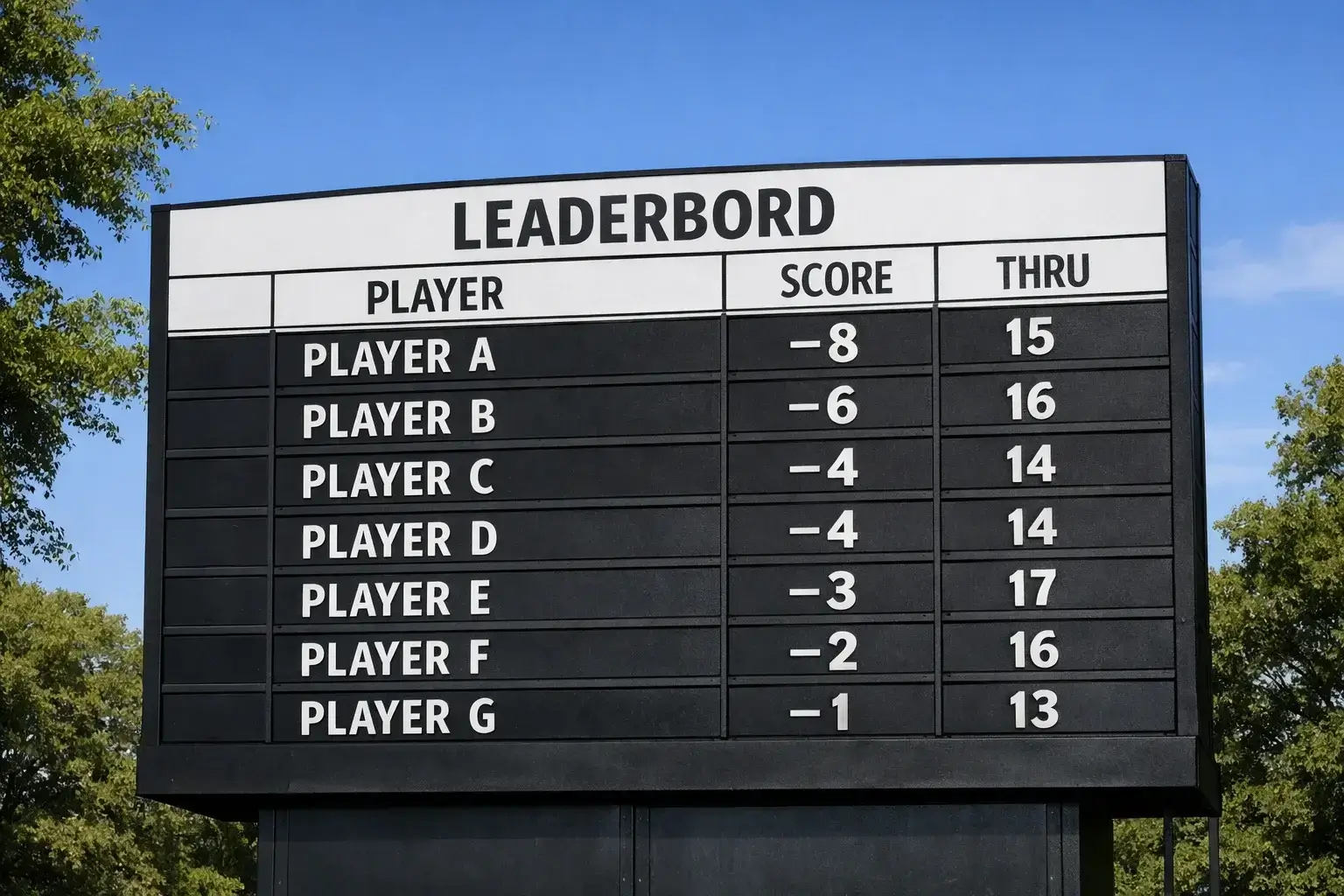
Top five finish bets cash when your selected golfer places anywhere from first through fifth. This market significantly reduces variance compared to outright bets while still offering meaningful returns. A player at +2500 for the outright might be +400 for a top five.
Top five markets carry notable dead heat risk because ties are common at the fifth position on a leaderboard. When multiple players share fifth place, dead heat rules reduce your payout proportionally. If three players tie for fifth and you bet one of them, your stake is effectively divided, shrinking your return accordingly. This risk should factor into your betting decisions.
Top 10 Finish Bets
Top ten finish bets represent what many experienced golf bettors consider the sweet spot for regular betting. The market offers enough cushion to accommodate variance while maintaining attractive odds on players you believe will compete on Sunday. A player priced at +2500 to win might be +180 to +250 for a top ten.
The dead heat concern intensifies at the tenth position. Tournament leaderboards frequently feature clusters of players tied between eighth and twelfth place, meaning your top ten bet could easily involve a three-way or four-way dead heat. Understanding this risk allows appropriate stake sizing. A top ten bet that appears to have won can transform into a modest return once dead heat reductions apply.
Top ten markets also serve as hedging vehicles during tournaments. If your outright selection stands three shots off the lead entering Sunday, backing them for a top ten guarantees profit regardless of the final outcome.
Top 20 Finish Bets
Top twenty finish bets occupy the conservative end of the finishing position spectrum. These wagers accept heavily reduced odds in exchange for vastly increased probability of success. Your player simply needs to beat roughly 85% of the field.
The value proposition lies in their utility for building bankroll and establishing consistent returns. Golf’s high variance makes it difficult to show profit betting only outright winners; most professional golf bettors supplement high-risk positions with lower-juice finishing position bets that grind out smaller profits over time.
Dead Heat Impact on Place Bets
Dead heat rules exist because golf tournaments do not break ties for positions other than first place. The standard formula divides your stake by the number of tied players who exceed the position threshold, then pays out at full odds on that reduced stake.
Consider a practical example: you bet $100 on a player to finish top ten at +200 odds. Three players tie for ninth, but only two spots remain in the top ten. Your $100 stake is divided proportionally—roughly $67 wins at +200 while $33 is lost. This mechanism catches many new golf bettors by surprise. Checking leaderboard tie situations before the final putt drops helps set expectations.
Comparing Risk and Reward Across Positions
Selecting the right finishing position market depends on your assessment of the individual player and your broader betting strategy. A player you believe has roughly one chance in twelve to win the tournament presents different value depending on which market you choose and how you weigh variance against expected return.
The mathematical relationship between outright and place odds follows relatively predictable patterns. Top five odds typically run about 25% to 30% of outright odds for consistent players, with higher ratios for volatile players who tend toward boom-or-bust results. Top ten odds run roughly 40% to 50% of outright, and top twenty odds approach 80% to 90% of outright. These ratios vary by sportsbook and by player type, creating opportunities for bettors who identify discrepancies between market prices and their own probability assessments.
Risk tolerance and bankroll structure should drive market selection as much as mathematical analysis. A bettor with limited capital who needs to extend runway while learning golf betting nuances should emphasize lower-variance finish positions. An experienced bettor with substantial bankroll might concentrate on outrights and top fives where the potential for positive expected value is higher, accepting longer losing streaks as the cost of pursuing larger edges.
Matchup Betting in Golf
Tournament Matchups

Tournament matchups pit two golfers against each other over all four rounds. Your task is selecting which player finishes ahead on the leaderboard—the field result is irrelevant. One could finish 40th and the other 60th, and only their head-to-head competition matters.
This market type drastically reduces the variables that make outright golf betting challenging. Instead of defeating 155 opponents, your selection only needs to beat one specific opponent. The reduced complexity appeals to bettors who can identify mismatches—perhaps one player excels in the specific conditions expected that week while the other historically struggles.
Pricing typically ranges from -150 on strong favorites to pick’em situations around -110. Many sharp bettors prefer matchups priced closer to even, where a modest edge translates to meaningful expected value.
Round Matchups
Round matchups shorten the competition to a single day. You are betting on which of two players posts the lower score during one specified round. This condensed format reduces exposure to full-week variance while increasing the importance of daily factors like tee time and weather.
The advantage lies in tactical flexibility. If you believe morning conditions favor scoring while afternoon wind will make life difficult, you can identify matchups where one player tees off early against an opponent playing late. Round matchups also resolve quickly, allowing bettors to recycle capital throughout the tournament week.
3-Ball Betting
Three-ball betting asks you to identify the lowest scorer among a grouped threesome during a single round. Sportsbooks typically release these markets Wednesday evening once official pairings are announced. The three-option structure creates different value dynamics than head-to-head matchups, with sportsbooks building in roughly 15% to 20% juice compared to 5% to 10% in two-way matchups.
Many bettors identify their favored three-ball plays by looking for groups where one elite ball-striker is paired with two players who struggle in the specific conditions expected that day.
Missed Cut Rules in Matchups
Understanding missed cut protocols is essential because golf tournaments eliminate roughly half the field after 36 holes. The most common approach declares all bets void if both players miss the cut, returning stakes. When one player makes the cut and the other misses, the player making the cut wins the matchup. Checking house rules before betting is mandatory since policies vary between operators.
First Round Leader (FRL) Bets
What Makes FRL Betting Attractive

First round leader bets offer some of the longest odds and highest volatility in golf betting. You are wagering that a specific player will hold the outright lead—or share the lead—after eighteen holes on Thursday. Most realistic contenders fall in the +3000 to +10000 range.
The appeal lies in having action that resolves within hours rather than days. Returns on successful FRL bets can be spectacular—hitting a +6000 FRL turns a $50 bet into $3,050. The tradeoff involves extremely low hit rates; even the most likely first-round leaders win that position well under 10% of the time.
Factors Affecting FRL Outcomes
First round leader betting rewards analysis focused on 18-hole performance patterns rather than four-day tournament results. Some players characteristically start strong before fading, while others need rounds to find their game. Historical first-round scoring averages matter more than overall career performance.
Tee time plays an outsized role. If weather forecasts predict afternoon wind while morning conditions remain calm, early starters gain a significant advantage that betting markets may not fully reflect. Aggressive scoring tendencies separate strong FRL candidates from players who grind pars and wait for opponents to make mistakes.
Dead Heat Frequency in FRL
Dead heats occur more frequently in first round leader markets than almost any other golf bet type. While tournament leaderboards separate after 72 holes, 18-hole leaderboards regularly feature multiple players tied at the top. A 7-under 64 on Thursday might be shared by four players, and anyone holding FRL tickets on those four faces dead heat reduction.
Managing FRL dead heat risk requires accepting that ties are not just possible but likely. Some bettors specifically target “first round leader without ties” markets that eliminate dead heat scenarios entirely, accepting reduced odds for the certainty.
FRL Betting Strategies
Effective FRL betting requires specialized analysis that differs from standard tournament handicapping. Focus on identifying players with strong first-round scoring histories, favorable tee times given weather expectations, and aggressive playing styles that generate birdies early. Recent form matters, but 18-hole form matters more than 72-hole results for this particular market.
Diversification across price points reduces variance without sacrificing expected value. A typical FRL betting card might include two or three bets: perhaps one player in the +2500 to +4000 range who provides solid hit rate, another in the +5000 to +8000 range offering stronger returns if it connects, and occasionally a deep longshot at +12000 or beyond when specific circumstances create value. This approach ensures you are not relying entirely on low-probability longshots while maintaining exposure to larger payouts.
Each Way Betting Deep Dive
The Anatomy of an Each Way Bet
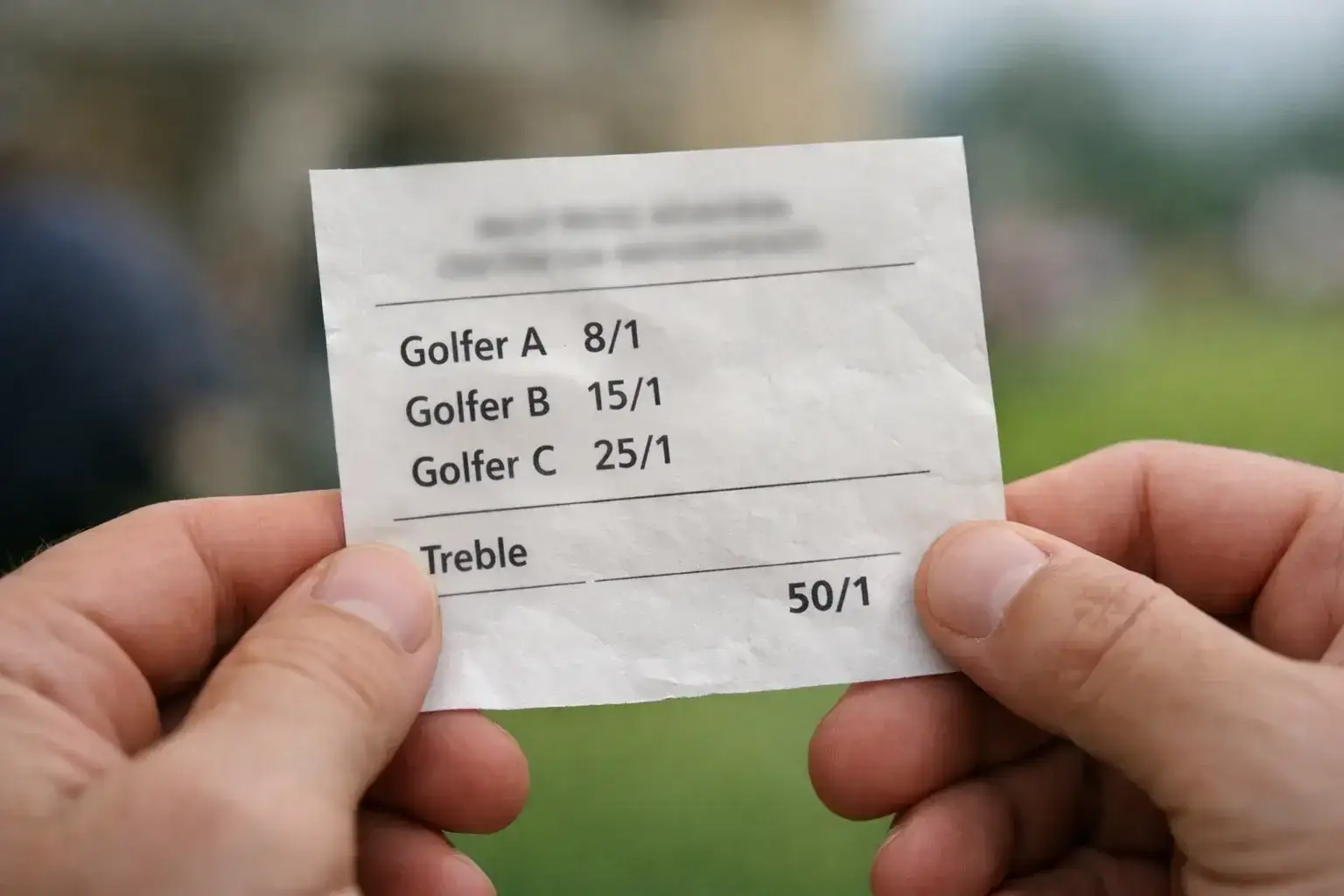
Each way betting represents a distinctly British innovation that has migrated to American sportsbooks. An each way bet is actually two bets in one: half your stake backs your selection to win outright, while the other half backs them to place within a specified range of positions, typically top five or top six.
When you place a $50 each way bet, you are wagering $100 total—$50 on the win and $50 on the place. If your player wins, both bets cash. If your player finishes fourth, you lose the win bet but collect on the place portion at fractionally reduced odds. If your player finishes outside the place range, both bets lose.
Place Terms Explained
Place terms define how the sportsbook calculates place payouts. Common structures include 1/4 odds for top five places and 1/5 odds for top six places. If outright odds are +1600 and place terms are 1/4, the place odds equal +400. Different sportsbooks offer different standard terms, and terms may improve for major championships.
Calculating Each Way Returns
Work through a complete example: you bet $50 each way ($100 total) on a player at +2400 outright with 1/4 place terms for top five.
If your player wins, the win portion returns $1,200 profit plus stake. The place portion pays +600, returning $300 profit plus stake. Total: $1,600 profit.
If your player finishes fourth, the win portion loses ($50), but the place portion hits at +600 for $300 profit plus stake. Net result: $250 profit.
If your player finishes twelfth, both portions lose—you lose your entire $100 stake.
When Each Way Beats Separate Bets
Each way sometimes offers better value than placing equivalent separate bets. Compare the implied place odds from each way terms against standalone place market prices. If the sportsbook offers +2400 outright with 1/4 place terms (implying +600 place odds) but their standalone top five market prices the same player at +450, each way provides better value. Always compare before assuming each way represents optimal structure.
Conversely, each way becomes disadvantageous when standalone place markets offer better odds than implied place terms. If that same +2400 player is available at +700 in a standalone top five market, you should bet outright and place separately rather than accepting +600 implied place odds through each way.
Each Way at Major Championships
Major championships typically offer enhanced each way terms reflecting larger fields and extended place structures. Standard events might offer 1/4 odds for top five, while The Masters or U.S. Open could offer 1/4 odds for top eight or 1/5 odds for top eight. These improved terms make each way betting relatively more attractive at majors than regular tour events.
The expanded place range accounts for the larger number of quality players competing at majors. A typical PGA Tour event might feature fifteen to twenty realistic contenders, while major championship fields pack thirty or more players capable of contending. Expanding place terms to top eight rather than top five reflects this competitive depth and provides bettors with fairer compensation for the increased difficulty of predicting major championship results.
Some sportsbooks offer additional each way specials during major championship week—temporarily improving terms to attract action. Monitoring these promotions allows savvy bettors to capture enhanced value during the year’s biggest events.
Prop Bets and Specials
Make/Miss the Cut
Make the cut and miss the cut represent binary props on whether a player will survive the 36-hole cut. PGA Tour events typically cut to the top 65 players and ties after two rounds. Value emerges when targeting players in the +100 to +300 range for miss the cut—typically those ranked between 75th and 150th in the world who face elevated cut risk in strong fields.
Hole-in-One Props
Hole-in-one props offer action on whether any player will make an ace during the tournament. Odds on “any hole-in-one during the tournament” usually sit around -150 to +100, reflecting that with 150+ players hitting multiple par-3s over four days, aces occur more frequently than intuition suggests. These bets provide entertainment value without requiring sophisticated handicapping.
Nationality Bets
Nationality props ask you to identify the highest-finishing player from a specific country or region—low American, low European, low Englishman. Pricing depends entirely on field composition. Dead heat rules apply when players from the same nationality tie for the lowest score from that group.
Winning Margin
Winning margin markets ask you to predict the gap between champion and runner-up. Standard options include win by exactly one stroke, win by two strokes, win by three or more, and playoff. Historical data shows most tournaments end with margins of one to three strokes. Course characteristics influence margin expectations—bomber-friendly courses with risk-reward finishing holes produce more dramatic separations, while tight technical courses tend to bunch the leaderboard. These bets add entertainment value without requiring you to identify the specific winner.
Major-Specific Props
Major championships generate unique prop markets unavailable at regular tour events. Grand Slam props ask about a player’s performance across all four majors in a calendar year—an exceptionally rare achievement. Career Grand Slam props offer odds on whether specific players will eventually complete the set by winning all four different majors during their careers.
Cut line specials at majors offer odds on where the 36-hole cut will fall—over/under a specific score relative to par. These bets require analyzing field depth and course difficulty rather than individual player performance. Other major-specific props include wire-to-wire leader, whether anyone will break the tournament scoring record, and various statistical achievements during championship week.
The expanded prop menus at majors reflect both the heightened interest from casual bettors and the sportsbooks’ desire to maximize handle during the year’s most-watched golf events.
Futures Betting
Season-Long Futures
Season-long futures markets offer odds on outcomes that will not resolve for months—FedEx Cup champion, PGA Tour Player of the Year, and similar season-ending honors. These bets tie up capital for extended periods but offer substantially longer odds than betting the same outcomes would during the actual events where they will be decided.
The extended timeline creates both opportunity and risk. Opportunity exists because early-season prices do not account for developments that will occur throughout the year. Risk exists because you are making predictions about events six to eight months in the future with capital you cannot access until resolution.
Major Championship Futures
Major championship futures open months before each event. A bettor in January might grab Masters futures at prices that will compress significantly by April. The case for major futures centers on odds movement—a player priced at +4000 in December might be +1800 by tournament week if their early-season form validates their candidacy.
Counter-arguments note that early futures cannot account for injury, form collapse, or other intervening factors. Most serious golf bettors limit futures exposure to 5% to 10% of total bankroll, preserving the majority for weekly tournament action where capital turns over more frequently.
Timing Your Futures Bets
Optimal futures timing depends on your handicapping approach and capital management preferences. Some bettors prefer betting immediately after the previous year’s event concludes—next year’s Masters futures open moments after the current champion dons the green jacket—when markets are thinnest and potential for finding inefficiency is highest. Others wait until specific information emerges that changes their probability assessments.
A reasonable middle approach staggers futures exposure throughout the year. Take a starter position early when odds are longest, then add to positions as confirming evidence emerges while maintaining some dry powder for tournament-week value if your player’s odds remain attractive. This laddered approach balances early access to long odds against preserving flexibility as information develops.
Conclusion
Golf betting offers a depth and variety that rewards bettors willing to understand its nuances. From the high-variance excitement of outright winners and first round leaders to the grinding consistency of top twenty finishes and tournament matchups, each market type serves different strategic purposes within a comprehensive golf betting approach.
The most successful golf bettors do not limit themselves to a single market type. They build diversified weekly betting cards that balance high-upside plays against probability-favored positions, manage bankroll across bet types with appropriate unit sizing, and select markets based on where their analysis reveals the clearest edges rather than defaulting to familiar bet structures.
Understanding bet types is foundational knowledge, but it represents just the beginning of golf betting education. Handicapping methodology—evaluating course fit, current form, and statistical profiles—determines which players to bet in whichever markets you select. Combining strong handicapping with appropriate market selection creates the conditions for sustainable golf betting success.
Compare the latest tournament markets and futures directly on our premier golf betting guide.
